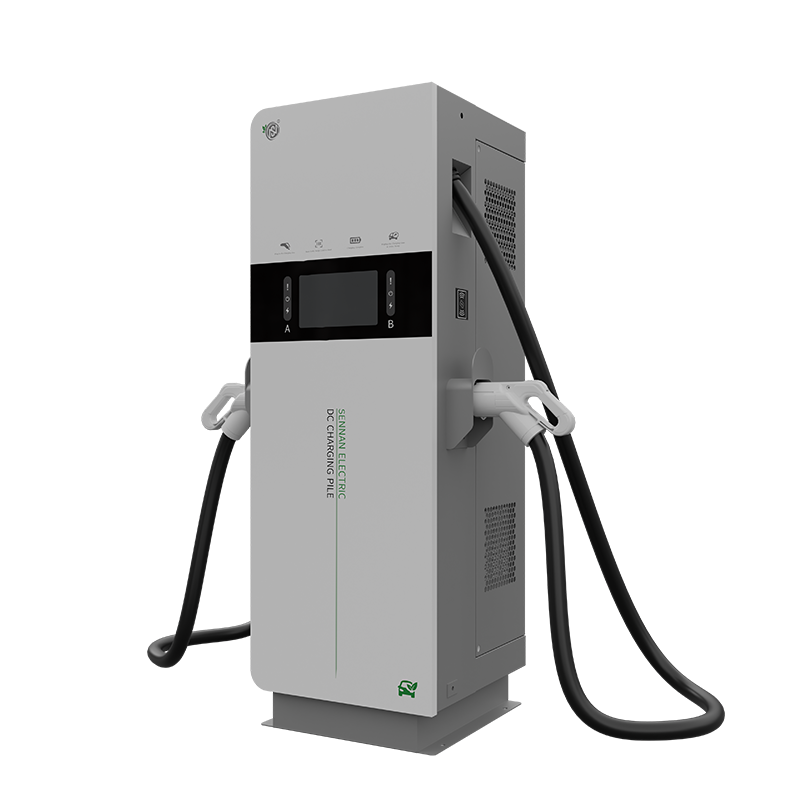
What is V2G Bidirectional Charging?
The Basic Concept
V2G bidirectional charging technology represents a fundamental shift in how electric vehicles interact with the power grid — turning EVs from passive consumers into active, flexible grid resources.
How V2G differs from other charging concepts:
- V1G (Unidirectional): Conventional charging where power flows only from grid to vehicle. Even without bidirectional capability, smart charging (controlling the timing and rate of charge) can provide some grid benefits.
- V2H (Vehicle-to-Home): Using the EV battery to power a home, typically during a power outage or to reduce peak demand charges. This is bidirectional but local, not grid-connected in the utility sense.
- V2B (Vehicle-to-Building): Similar to V2H but for larger buildings, using EV batteries to supplement building power and reduce peak demand.
- V2G (Vehicle-to-Grid): Full two-way interaction with the electric grid, where the EV participates in grid services, demand response programs, and wholesale energy markets.
While V2H and V2B are valuable applications and important steps on the path, true V2G offers the greatest potential for grid services and the largest market opportunity for EV owners and charging providers.
How Bidirectional Charging Works
Bi-directional EV chargers for grid services are more complex than standard chargers because they must handle power flow in both directions while maintaining grid compatibility and safety. Unlike ordinary chargers that simply convert AC to DC for battery charging, V2G bidirectional charging technology requires sophisticated power electronics that can invert DC battery power back to AC, synchronize with grid voltage and frequency, and meet all grid code requirements.
Key components of a V2G system:
The Benefits of Vehicle-to-Grid Integration
For Grid Operators and Utilities
Vehicle-to-grid integration solutions offer significant benefits for electric grids and utility companies, particularly as renewable energy penetration increases and grid complexity grows. By enabling large fleets of EVs to charge and discharge in response to grid signals, vehicle to grid integration solutions help balance supply and demand, support renewable integration, and reduce the need for costly grid infrastructure upgrades.
For EV Owners and Fleet Operators
Beyond the grid-level benefits, V2G also creates new opportunities and value streams for EV owners and fleet operators.
For the Environment and Society
Reduced need for new power plants:
With V2G providing peak capacity and ancillary services, there is less need to build new peaker power plants, many of which run on fossil fuels. This both reduces emissions and avoids the environmental disruption of new power plant construction.
V2G Applications and Use Cases
Residential V2G
Residential V2G involves individual homeowners with bidirectional chargers participating in utility programs or demand response initiatives. While the capacity of a single residential EV is relatively small, large numbers of them aggregated together can provide significant grid resources. A residential bi-directional EV charger for grid services typically operates at 7-11 kW, which is sufficient for most homes and can still contribute meaningfully when aggregated across thousands of households.
Despite these challenges, residential V2G is expected to grow significantly as more vehicles support bidirectional charging and as utilities develop programs and rate structures that make V2G economically attractive for homeowners.
Commercial and Fleet V2G
Commercial fleets represent perhaps the most promising near-term application for V2G, because fleets typically have predictable schedules, centralized charging, larger batteries, and higher energy costs that make the economics more favorable.
Fleet V2G applications:
- Peak demand reduction: Fleet depots with high electricity demand can use V2G to reduce peak demand charges, which are often one of the largest components of commercial electricity bills. By discharging vehicle batteries during peak periods, fleets can significantly reduce their demand charges.
- Demand response participation: Fleets can participate in utility demand response programs, earning revenue for reducing load (or injecting power) when the grid is stressed.
- On-site renewable integration: Fleets with on-site solar generation can use V2G to store excess solar energy in vehicle batteries, maximizing self-consumption and reducing grid electricity purchases.
- Backup power for facilities: In the event of a power outage, fleet EVs with V2G can provide backup power to depot facilities, keeping critical operations running.
- Microgrid support: Fleet depots operating as or within microgrids can use V2G as a distributed energy resource to help balance the microgrid and improve resilience.
Sennan Electric works with fleet operators and depot managers to design and implement V2G-enabled charging solutions that maximize the value of fleet electrification while ensuring that operational requirements are always met. Our V2G bidirectional charging technology is optimized for fleet applications, with features like smart scheduling, priority charging, and configurable discharge parameters that keep vehicles ready for service while extracting maximum value from V2G participation.
Utility-Scale V2G Aggregation
At the utility scale, aggregators combine hundreds or thousands of V2G-enabled EVs into a single resource that can participate in wholesale electricity markets and provide grid services at scale.
Technical Challenges and Considerations
Charger and Vehicle Compatibility
One of the most significant technical barriers to V2G adoption is the current state of charger and vehicle compatibility.
Charger considerations:
Cost: Bidirectional chargers are significantly more expensive than standard unidirectional chargers, primarily due to the more complex power electronics required. As production volumes increase and technology matures, this cost premium is expected to decrease.
Standards: Multiple standards exist for bidirectional charging, and interoperability between different chargers and vehicles is not always guaranteed. Common standards include CHAdeMO (which has supported bidirectional charging for years), CCS (where bidirectional standards are still being finalized), and Tesla's NACS (which has announced V2G capability plans).
Power levels: V2G chargers are available in various power levels, from relatively low-power AC bidirectional chargers to high-power DC bidirectional fast chargers. The appropriate power level depends on the application, battery size, and desired charge/discharge times.
Vehicle considerations:
BMS support: The vehicle's battery management system must explicitly support bidirectional charging and V2G functionality. Most EVs currently on the market do not support V2G, though an increasing number of new models are adding this capability.
Battery warranty: A major concern for EV owners considering V2G is whether bidirectional charging will affect their battery warranty. Many vehicle warranties currently do not explicitly cover V2G use, creating uncertainty. However, some manufacturers have started to include V2G in their warranties.
Battery degradation: Excessive cycling from V2G could potentially accelerate battery degradation. However, studies suggest that with proper control strategies, the impact of moderate V2G use on battery life is minimal and may even be beneficial in some cases by keeping the battery at an optimal state of charge.
Communication protocols: V2G requires communication between the charger, vehicle, and grid management system. Standardized communication protocols are essential for interoperability, and progress is being made in this area with standards like OCPP 2.0.1 and ISO 15118-20.
Grid Interconnection and Power Quality
Connecting bidirectional chargers to the electric grid raises important technical issues related to safety, power quality, and grid stability.
Power quality considerations:
- Harmonics: Power electronic converters (like those in bidirectional chargers) can inject harmonic currents into the grid. Modern V2G chargers use advanced control techniques and filtering to keep harmonic distortion within acceptable limits defined by standards like IEEE 519 and IEC 61000.
- Voltage regulation: The injection of active power by V2G chargers can affect local voltage levels. Chargers must be designed to maintain voltage within acceptable ranges and potentially provide reactive power support for voltage regulation.
- Frequency response: V2G chargers must synchronize with grid frequency and respond appropriately to frequency deviations. They must also cease to energize the grid if frequency or voltage goes outside acceptable ranges. As a leading provider in this field, Sennan Electric offers bi-directional EV charger for grid services tailored to diverse industry needs.
Cybersecurity and Data Privacy
As with any grid-connected smart technology, V2G systems introduce cybersecurity and data privacy considerations that must be taken seriously. A robust bi-directional EV charger for grid services must include end-to-end security — from firmware signing and secure boot to encrypted cloud communication — to protect both grid operations and user data.
Regulatory and Market Landscape
Global V2G Developments
As EV adoption continues to accelerate worldwide and as the technology and regulatory frameworks for V2G mature, we can expect to see V2G move from pilot projects to commercial deployment in an increasing number of markets.
Business Models and Economics
The economic viability of V2G depends on the specific business model, the local electricity market structure, regulatory conditions, and the costs of equipment and installation. Several V2G business models are currently being tested and deployed, each requiring different levels of investment in vehicle to grid integration solutions and supporting infrastructure.
Fleet operator V2G:
Fleet operators use V2G primarily for their own benefit — reducing demand charges, maximizing on-site solar consumption, and improving resilience — rather than selling services to the grid. The economic case is based on internal cost savings rather than external revenue.
Managed charging plus V2G:
This model combines unidirectional smart charging (V1G) with some V2G capability, starting with simpler managed charging programs and adding bidirectional functionality as the business case develops. This phased approach reduces upfront investment and risk.
Sennan Electric's Role in V2G
Our V2G Charging Solutions
Sennan Electric is at the forefront of V2G charging technology, developing and manufacturing advanced bidirectional chargers and vehicle to grid integration solutions for residential, commercial, and utility applications. Our product lineup includes AC and DC bidirectional chargers across multiple power levels, all built on a common platform that supports seamless integration with our vehicle-to-grid integration solutions and third-party energy management systems.
Working with Industry Partners
Our partnership approach:
- Automobile manufacturers: We work with EV manufacturers to ensure charger-vehicle interoperability and to develop new V2G features and capabilities.
- Utilities and grid operators: We collaborate with utilities and grid operators to develop V2G solutions that meet grid needs while benefiting EV owners.
- Aggregators and energy service providers: We partner with aggregators and energy service companies to integrate our chargers with their platforms and services.
- Fleet operators: We work directly with fleet operators to design V2G-enabled charging solutions that optimize both operational and financial performance.
- Research institutions: We partner with universities and research institutions on V2G research and technology development.
Conclusion
The road to widespread V2G will be built step by step, starting with the most economically attractive applications and expanding as technology improves and costs decline. For forward-looking businesses, utilities, and fleet operators, now is the time to start exploring V2G, understanding its potential, and positioning to benefit from this transformative technology.