


Please Leave Us A Message
Privacy statement: Your privacy is very important to Us. Our company promises not to disclose your personal information to any external company with out your explicit permission.

A proactive Ev Charging Station maintenance guide is essential for any organization that owns or operates charging equipment. Proper maintenance not only maximizes uptime but also extends equipment life, preserves warranty coverage, and ensures safe operation. The cost of preventive maintenance is typically far less than the cost of emergency repairs, lost revenue, and customer dissatisfaction from unexpected failures.
This commercial charger preventive maintenance guide covers everything operators need to know: the importance of maintenance, recommended preventive maintenance schedules for both AC and DC chargers, common failure modes and troubleshooting, Dc Fast Charger service and repair best practices, and strategies for EV charging station uptime optimization. Whether you operate a handful of Level 2 chargers or a large network of DC fast chargers, these best practices will help you maintain reliable, high-performing charging infrastructure.

Charging station downtime has tangible and intangible costs. Direct financial costs include lost revenue from charging sessions that don't happen, emergency repair expenses (often higher than scheduled maintenance), and potential warranty issues if equipment is not properly maintained.
Many charging station operators fall into a reactive maintenance pattern — they wait for something to break, then fix it. While this approach minimizes apparent maintenance spending in the short term, it almost always costs more over the life of the equipment.
For commercial charger preventive maintenance programs, the optimal strategy combines scheduled preventive maintenance with real-time remote monitoring that can detect emerging issues before they cause full failures. This predictive approach maximizes uptime while controlling maintenance costs.
AC Level 2 chargers are relatively simple devices with fewer moving parts than DC fast chargers, but they still require regular maintenance for reliable operation and long service life. A recommended maintenance schedule includes:
Monthly:
For outdoor installations in harsh environments (coastal areas with salt air, industrial areas with chemical exposure, or extreme temperature ranges), more frequent inspections may be warranted — perhaps quarterly instead of annually for full electrical inspection.
DC fast chargers are significantly more complex than Level 2 chargers, with power electronics modules, cooling systems, and more extensive software. They typically require more frequent and more sophisticated maintenance. A DC fast charger service and repair program should include:
For high-utilization DC fast chargers (e.g., those at busy highway locations operating 16+ hours daily), semi-annual major service may be appropriate instead of annual. Heavy use accelerates wear on contactors, cooling system components, and connector mechanisms.
Fleet depots with many chargers face somewhat different maintenance considerations. The volume of equipment means that some level of ongoing issues is inevitable, so the maintenance program should emphasize rapid response and strong inventory of spare parts.
Fleet charging also introduces scheduling challenges — maintenance must be coordinated with vehicle schedules to minimize impact on operations. Many fleet operators schedule maintenance during off-peak hours or on weekends when fewer vehicles need charging.
Despite their relative simplicity, Level 2 chargers can experience a range of common problems:
No power / dead display: This usually indicates a tripped circuit breaker, loss of grid power, or a failed internal power supply. Start by checking the breaker and grid power, then verify internal fuses and power supply output.
Charging won't start: If the charger powers on but won't initiate charging, possible causes include communication issues between charger and vehicle, faulty connector or cable, ground fault detection, or a problem with the vehicle's onboard charger. Try a different vehicle or test cable to isolate the issue.
Intermittent charging stops: Charging that starts and stops repeatedly can be caused by loose connections, overheating components, thermal throttling, or vehicle-side issues. Check fault logs for specific error codes that indicate the root cause.
Connectivity issues: Chargers losing network connection are a common complaint. Causes include weak Wi-Fi or cellular signal, network outages, modem/radio failures, or software glitches. Rebooting often resolves temporary issues, while persistent problems may require antenna relocation or hardware replacement.
DC fast chargers have more complex failure modes due to their higher power and greater complexity:
Cooling system failures: Both air-cooled and liquid-cooled DCFC can experience cooling problems. Overheating causes power derating or complete shutdown. Common cooling issues include clogged air filters, failed fans, coolant leaks, pump failures, and blocked coolant passages. Cooling problems are one of the most frequent causes of DC fast charger downtime and are a primary focus of EV charging programs.
Power module failures: The power electronic modules that convert AC to DC power are subject to failure from electrical stress, thermal cycling, and component aging. Modular charger designs help here — if one module fails, the charger can continue operating at reduced power rather than going completely offline.
Contactor and relay wear: High-current DC contactors are mechanical devices that wear out over time from arcing and mechanical fatigue. Worn contactors can cause charging interruptions, voltage drops, or even complete failure. Contactors should be tested periodically and replaced proactively in high-utilization chargers.
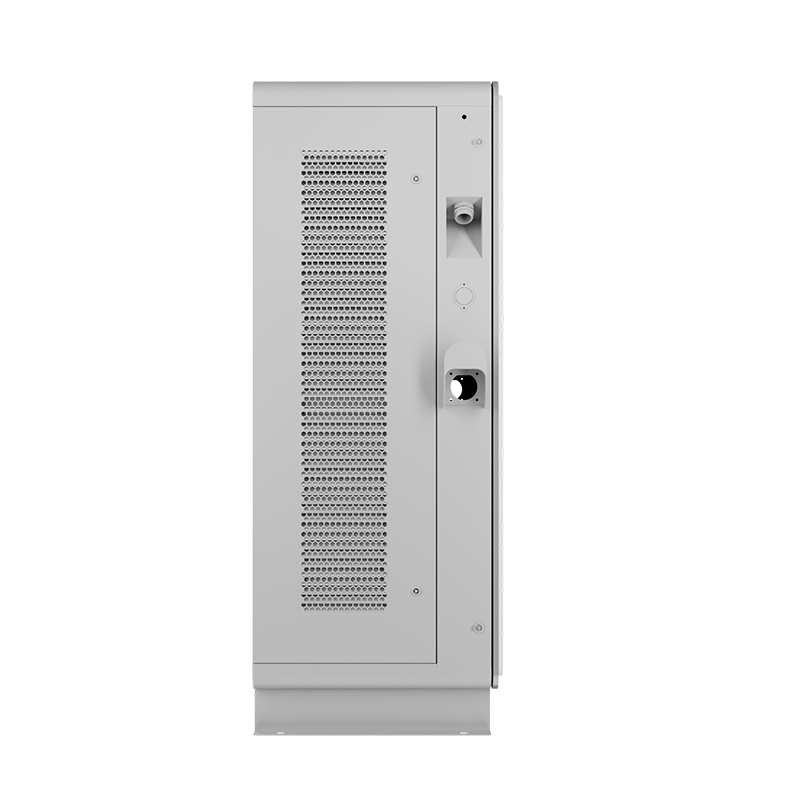
A systematic approach to charging equipment troubleshooting saves time and reduces misdiagnosis:
Good remote monitoring reduces mean time to recovery (MTTR) by enabling technicians to arrive on-site with the right parts and tools, already knowing what the problem is. It also helps identify chronic problem chargers that consistently have issues, allowing for targeted replacement or upgrade.
For multi-site operators or those with many chargers, maintaining a strategic inventory of spare parts significantly reduces downtime. Rather than waiting for parts to be shipped when a failure occurs, having critical spares on hand means repairs can be completed in hours rather than days or weeks.
Essential spare parts to stock include:
For organizations with 10+ chargers, stocking complete spare units for critical locations may be justified. If a charger fails and cannot be quickly repaired, swapping in a complete spare unit gets the station back online immediately, with the failed unit sent for repair as time permits.
For sites where reliability is critical, building redundancy into the charging infrastructure reduces the impact of individual charger failures. This "N+1" design philosophy means having one more charger than the typical peak demand requires, so if one unit goes down, the others can absorb the load.
For DC fast charging hubs, using chargers with modular power architecture provides another layer of redundancy. If one power module fails, the charger simply operates at reduced power rather than shutting down completely — better to charge at 80 kW than not at all.
Even the best monitoring systems miss some issues. Drivers are often the first to notice problems, so providing easy ways for them to report issues and incorporating that feedback into maintenance workflows improves overall uptime.
A key decision for charging station operators is whether to handle maintenance in-house or outsource it to a third-party service provider. The right approach depends on the size and complexity of the charging network, the operator's in-house electrical capabilities, and the geographic dispersion of the sites.
In-house maintenance makes sense for operators with many chargers in a concentrated geographic area, especially if they already have electrical maintenance staff. In-house teams can respond quickly, develop deep familiarity with the specific equipment, and have lower per-unit service costs once the team is established.
For many operators, a hybrid approach works best: handling basic tasks (cleaning, filter changes, resets) in-house while outsourcing more complex repairs and major service to specialists.
When choosing a service provider for EV charging, consider:
For multi-brand networks, working with a provider that services multiple brands is more efficient than managing separate maintenance contracts for each equipment manufacturer.
A lifecycle management approach includes tracking equipment age and cumulative usage, monitoring failure rates to identify when equipment is entering the wear-out phase, and developing a phased replacement plan that spreads capital costs over time rather than replacing everything at once.
The EV charging industry evolves rapidly, and equipment that was state-of-the-art five years ago may already be functionally limited or unsupported. Technology obsolescence is a real concern — charging standards evolve, communication protocols advance, and older equipment may not support new features or security requirements.
Selecting equipment based on open standards (like OCPP) reduces the risk of being locked into a vendor ecosystem and makes it easier to upgrade network software without replacing hardware. Choosing manufacturers with strong product roadmaps and backward compatibility also extends the useful life of charging investments.
Maintaining active warranty coverage and knowing how to make warranty claims is an important part of equipment management. Keep detailed maintenance records — many warranties require proof of proper preventive maintenance and may be voided if equipment is not serviced according to the manufacturer's specifications.
Track warranty expiration dates for all equipment and plan accordingly. Extended warranties available for purchase at the end of the standard warranty period may be worth considering for critical locations or expensive equipment like DC fast chargers.

A well-executed maintenance program is essential for getting the most value out of EV charging infrastructure. Whether you follow a detailed EV charging station maintenance guide for a small site or manage a large network with a dedicated maintenance team, the principles are the same: proactive preventive maintenance reduces costs and downtime, remote monitoring enables rapid response, spare parts and redundancy minimize the impact of failures, and a focus on continuous improvement drives long-term reliability.
For commercial charger preventive maintenance, the investment in regular service pays for itself many times over in avoided downtime, extended equipment life, and improved customer satisfaction. For DC fast charging in particular, a structured approach to EV charging is critical given the complexity of the equipment and the high cost of downtime.
As the EV charging industry matures, EV charging station uptime optimization will only become more important. Drivers are becoming more dependent on public charging and less tolerant of poor reliability. Operators that invest in strong maintenance programs and deliver consistently high uptime will build competitive advantage, while those with poor reliability will lose customers and damage their reputation.

March 24, 2026

March 19, 2026

October 14, 2026
Email to this supplier
March 24, 2026
March 19, 2026
October 14, 2026
Privacy statement: Your privacy is very important to Us. Our company promises not to disclose your personal information to any external company with out your explicit permission.
Fill in more information so that we can get in touch with you faster
Privacy statement: Your privacy is very important to Us. Our company promises not to disclose your personal information to any external company with out your explicit permission.